

- Henry Ford’s famous line to Model T customers, “What colour would you like, black or black?” That was a reflection of a deep-thinking person … “efficiency over choice.”
– But behind that simple analogy was a man quietly experimenting with ideas far ahead of his time. Ideas that might surprise even the most devoted car enthusiasts.
Rumour has it that back in the 1940s, Henry Ford built a car made from hemp mixed and bonded with a type of resin. In case you’re not familiar, hemp is a form of the marijuana, cannabis plant. Apparently, only one car was ever built, and it was dubbed the “Henry Ford Soybean Car.”
Now, as you might guess, with only one ever made, Ford’s prototype soybean car never made it into production.
***However, you have to wonder, after reading the original story, did Henry start a revolutionary industry with his hemp mixture without even realizing it? Well, you decide as you read on…
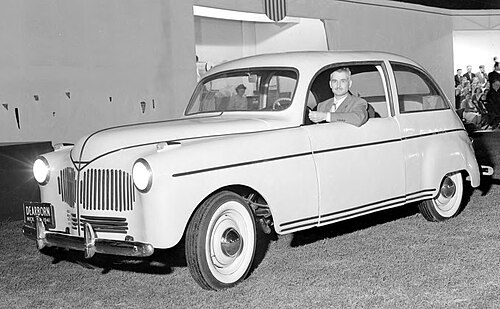
The story of Henry Ford’s 1941 prototype “Soybean Car” starts this way, with a little humour along the way.
I found this storyline of a car manufactured with body panels made from hemp fibers particularly interesting, especially during wartime. And considering the timeline and the phrase, “necessity is the mother of invention” than certainly applies.
The war was raging in Europe, and raw materials such as steel and other metals were being diverted to the war effort and not car manufacturing.
So, given that context, the idea of building a car using plant-based fiber materials, anything but steel gains a bit of credibility.
Now, this may sound like shifting into another gear, but watch this YouTube clip (below) and, you’ll understand the humour and parallel in my story.
I must mention that the first thing that came to mind when thinking about Henry Ford’s “vegetation on wheels” was the Cheech and Chong movie Up in Smoke. The “Fiberweed Van” they drove was a 1966 Chevrolet step van joined to the tailfins of a 1954 Cadillac. The van was constructed entirely out of “fiberweed,” a fictional solid marijuana resin made for the movie. In reality, research shows it was actually fiberglass painted green.
Corvorado Cadillac Pimpmobile: The James Bond Car That I Couldn’t Have Bought ‘But Didn’t’ 🔗
Back to the historical event of Henry Ford’s one-of-a-kind car.
- The most famous historical example of a hemp-integrated vehicle is Henry Ford’s 1941 prototype, often referred to as the “Soybean Car.” Despite its nickname, the vehicle’s plastic body panels were a composite mixture of various agricultural fibres, essentially an early form of agricultural plastic.
Apparently, the mix included wheat, flax, ramie, and hemp fibers. Combine them, and voilà, you have something approaching the strength of steel.
Because the panels contained hemp fibers, some people referred to it as the “hemp car.” However, the most accurate description is a soybean-based plastic car reinforced with several plant fibers.
However, regardless of the exact mixture, Ford claimed the material was roughly 25–30% lighter than steel, which, in my estimation, makes the car more fuel-efficient.
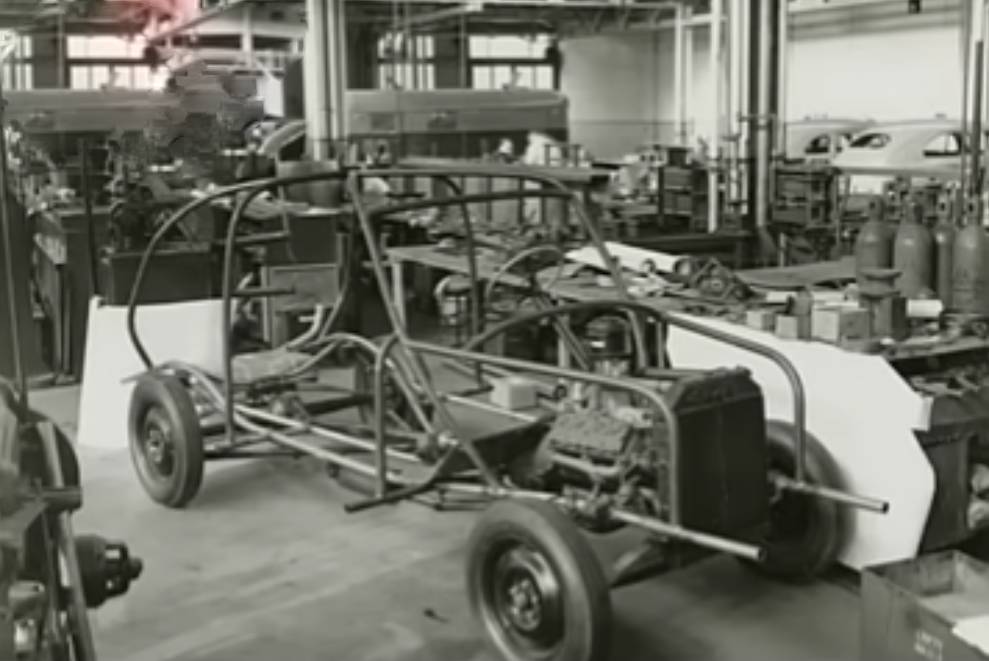
- Historical photos also show the prototype with a steel tube frame and 14 plastic body panels. While the exact configuration isn’t entirely clear, the concept demonstrated a hybrid structure combining steel and plant-based materials.
CAR GUY’S MOST READ NEWSPAPER… OLD AUTOS
Perhaps the most intriguing aspect is that Henry Ford reportedly experimented with running his V8 flathead engine on a form of hemp-based fuel instead of gasoline, which was also scarce at the time. That alone would be a remarkable engineering achievement, growing your own fuel is a revolutionary idea. Though, one might imagine oil companies wouldn’t have been thrilled. Unfortunately, the exact formula ford used has been lost to time.
So One Would ASK: … What Happened to the Soybean Car?
As mentioned, the car never went into production. World War II shifted Ford’s focus entirely toward military manufacturing. After the war, gasoline became plentiful again, and people were eager to move on with their lives. As a result, Ford’s 1941 prototype, with its plant-based body panels, faded into history.
The car was either disassembled, scrapped or thrown in a fire for all to enjoy that distinct aroma only Marawana (weed) can give. The bottom line is that Henry Ford’s 1941 prototype “Soybean Car” is gone, along with one of the most interesting experiments in automotive engineering. Today, only photographs remain.
**** For you car enthusiast, here is a thought.
Maybe Ford’s Soybean Car is sitting in a farmer’s woodshed waiting for a “Barn Find Picker” to bring it back to life.
Should You Liquidate Your Classic Car Collection Before You Die? CLICK HERE 🔗
Final Thoughts
In today’s automotive world, materials like fibreglass, stainless steel, and aluminum are widely used. Beyond that, several modern vehicles incorporate hemp or other plant fibers, “but, mostly in interior panels, trim pieces, or composite parts.”
Automakers use these materials because they are lightweight, strong, and more environmentally friendly than traditional fibreglass or petroleum-based plastics. The Mercedes-Benz C-Class uses hemp-based biocomposite materials in parts such as:
BMW reinforced door panels with hemp fibers mixed with plastic.
Mercedes-Benz C-Class uses hemp biocomposite materials in parts of their car, such as:
* seat backs
* door panels
* interior trim
Mercedes has also experimented with bamboo and other plant fibers in newer electric models. Thanks to IP Market Research
Porsche 718 Cayman GT4 Clubsport uses natural-fibre composite body panels, which are made partly from hemp and flax. The panels replace fiberglass to reduce environmental impact. Thanks to “Vista Hemp – Information Education Ideas”
Here are other everyday household products that use Hemp, thanks to CFAH for the info:
- Clothing & Accessories
- Foods & Drinks
- Health & Wellness
- Beauty
- Pet affiliate
- Home & Office
- Farming & Gardening
- Automobiles
*** Not only was the ‘Soybean Car’ an interesting achievement back in the day, I also have to wonder, “given some of this information,” did Henry Ford long-term start a revolutionary industry? ***
Thank you for reading another unusual automotive theme, story, however, to keep the lights on and the coffee brewing, there is a donation button if you feel like donating to the cause. I thank you in advance.