Researching Chevrolet’s iconic bowtie for this weekly article, not only did I find that some are rare and valuable, but the most intriguing part was, “”Nobody really knows how this GM logo came to be. “” *** Only ideas, hearsay and rumours. BUT folks… “I think I solved the mystery.”
*** Here are the most popular ideas a person could entertain on the origin of the bowtie and as a bonus for you gearhead collectors, “I’ll explain what to look for on the rare ones. And for you “not so much General Motor fans” the GM bowtie does not look like the featured photo shown above, however, it does have some resemblance to the famous Chevrolet Bowtie featured BELOW.
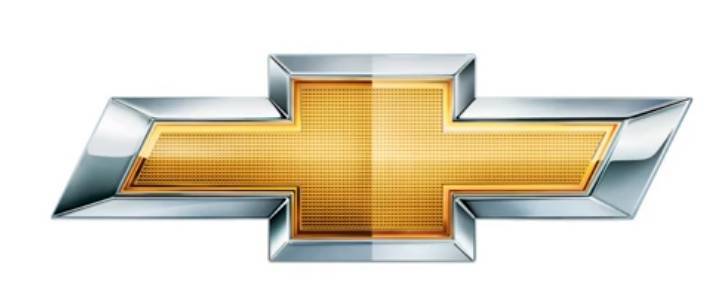
Now I showed the two photos for a fun comparison; Here is the rest of my story.
The GM bowtie almost always refers to the famous logo used by “Chevrolet”, (featured above), the main mass-market brand of General Motors. It’s one of the most recognizable automotive emblems in the world.
It’s also worth noting that the bowtie has changed from blue to gold to black or even outlined. … That part we know. However, the basic shape as we all recognize, has remained the same throughout the history of the bowtie. And that’s over a 110 hundred years.
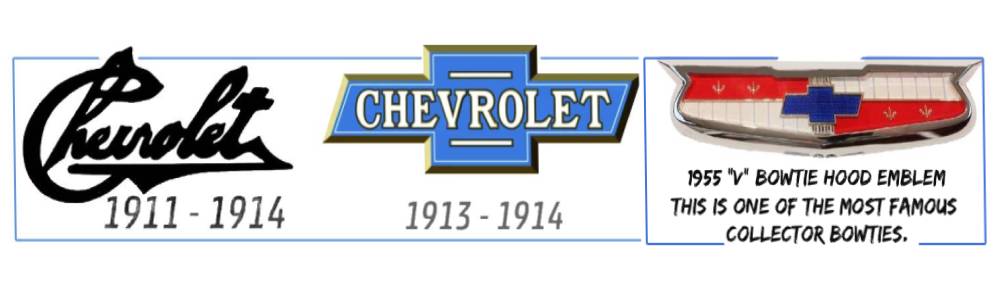
The original story goes that the Chevrolet Bowtie was founded in 1911 by businessman William C. Durant and race car driver Louis Chevrolet. In late 1913 it first appeared on the front-center of the grille/rad housing on the 1914 Chevrolet H-2 Royal Mail and the H-4 Baby Grand models. The recognisable emblem quickly became a staple, replacing previous branding and appearing on all 1914 models at the New York auto show.
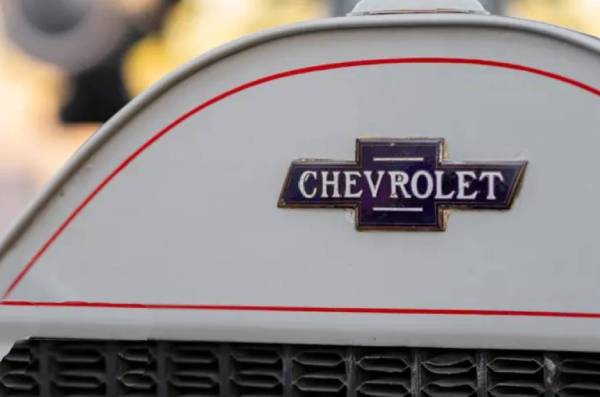
That part of the story most all automotive historians seem to agree on, however: Although they all agree Chevrolet co-founder *William C. Durant introduced the logo originally, nobody “without a doubt” can agree on, the exact inspiration behind the bowtie emblem. That part is still being debated amongst historians today.
But here we will explore a few other theories and then, “I will give you my simple explanation.”
#1 The number one most believed story is, “The French Hotel Connection” or the “Parisian Wallpaper story.” It suggests that Durant, a co-founder of General Motors and Chevrolet, was inspired by a repeating pattern they observed on the walls of a French hotel.
Captivated by the geometric aesthetic, Durant reportedly tore a small swatch of the paper from the wall and tucked it into his wallet, believing it would serve as a distinctive nameplate for a future automobile.
Now again, all car guys know that bit of history, however, there are other rumours.
While this narrative was officially adopted by the company for decades, alternative theories involving family memoirs, newspaper advertisements, and national symbols have since emerged to challenge the original thought.
#2 Here is another story by “Kelly’s Blue Book” that says, Durant (while on vacation) saw a bowtie-shaped logo in a newspaper ad and decided to use something similar for his Chevrolet line.
#3 And then there is historian Ken Kaufmann, who came up with this idea. He found in 1911 there was an ad for “Coalettes ” fuel that had a slanted bowtie design, which may have inspired the emblem. Again, written in a Kellie’s Blue Book article.
#4 However, some people just think the design references the Swiss cross, honoring Chevrolet co-founder Louis Chevrolet, who was born in Switzerland. (Motor Trend]
Bottom line, folks, with many hours of researching: No one knows the exact origin for the GM bowtie for sure. However, up until now, we can all agree on one thing … It’s the most iconic and recognized car emblem seen today.
So as we agree to disagree on the origin, it could have been as simple as this explanation.
William C. Durant has been to many grand places around the world before the brain wave of the bow tie idea. His inspiration maybe didn’t start in one place as thought. He looked at wallpaper design that impressed him, maybe the loyalty of a friend’s heritage had something to do with the design.
And, the origin of the bowtie story is still a mystery; however in my mind, this is the simplest explanation of all, and the most reasonable.
“”” Durant’s daughter, Margery, wrote that in 1929 her father sketched that same design on a napkin at the dinner table. ””
- Now, that brings us to a combination of events in his travels and unknowingly, did he put all these thoughts together and come up with the Iconic Bowtie that we all see today, “scribbled down on a napkin no less.” Just like his daughter caught him doing many times at the supper table. “Doodling.”
The History of the GM Bowtie has finally been solved. It was a combination of all the things from his travels and wa-la, GM Bowtie has appeared. 👏 👍🥳
*** Now that I have single handedly solved the puzzle that has eluded every car guy for over a century, here is some fun information.
* But, *Before we venture on to the rare bowties collectors might be interested in: “Chevrolet” is the keyword in this story. Research showed that you will not find this iconic bowtie on a Pontiac or any GMC product. Only “Chevrolet” has the honour of displaying this iconic emblem.
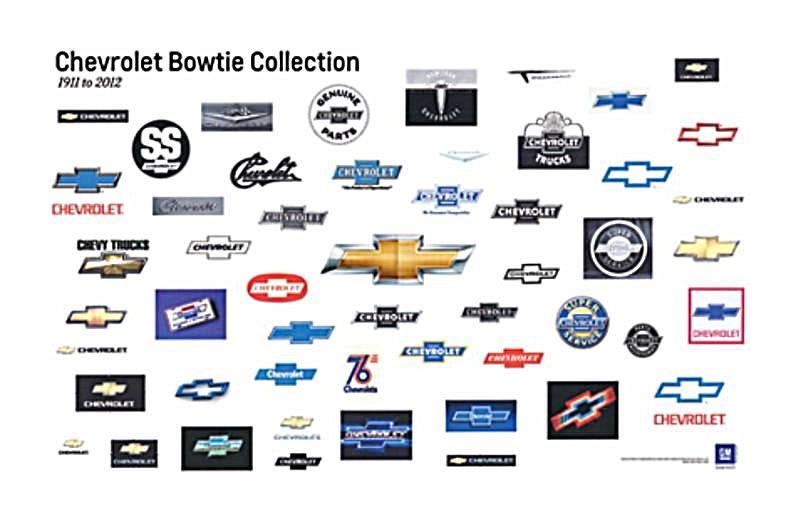
Now the fun part for you, automotive “Badge & emblem” collectors;
Here are a few interesting facts. *** DID YOU KNOW: The early Bowtie Designs of (1910s–1930s are highly collectable because they were made from porcelain)
** Did you also know that GM experimented with different designs and only made a few prototype bowties? Needless to say, they are rare because of the few they produced.
We all know what the first bowties look like: They often had “Chevrolet” written across the center.
- Sometimes GM used **blue, white, or gold colour schemes that appeared on radiators, hubcaps, and advertising.
Thanks to the information from (Logo Design Magazine) https://www.logodesign.org/
By the 1930s, the design shifted to bold black-and-white versions with thicker lettering. By the Mid-Century Changes
(1940s–1980s) And during this period, the bowtie shape stayed the same, but colours and styling changed:
- 1940s–60s: chrome, blue, and gold variations
- Often integrated into grilles or nameplates
- Used alongside the full “Chevrolet” script
In 1985, Chevrolet made a big change: The bowtie became a standalone symbol without the “Chevrolet” text. Thanks to “Logo Design Magazine”
According to Wikipedia: the Modern Bowtie (2000s–Today), Chevrolet standardized the gold bowtie across its lineup worldwide to strengthen brand identity. And today you’ll see several versions:
- Gold bowtie – traditional corporate branding
- Black bowtie – optional sporty styling
- Illuminated versions on some newer vehicles
>>> It’s also worthy to note, The overall shape has barely changed since 1913. Which some may suggest is unusual for automotive logos. Over 215 million vehicles have carried the emblem. (Again, thanks to Kbb.com.)
>>>Did you know: It’s the longest-running car logo design with nearly the same recognizable shape for more than a century. <<<
If you are a collector of rare automotive memorabilia or an automotive swap meet junky like myself, you will be interested in this next part.
Rare or unusual Chevrolet Bowtie Badges Collectors to Look For
- Early Enamel Bowties (1914–1920s)
The first emblems used on early cars from Chevrolet were “porcelain-style enamel badges” mounted on radiators.
*Why collectors want them
- Fragile enamel chips easily.
- Many were replaced during repairs.
- Surviving originals are scarce today.
A clean original can sell for hundreds to thousands of dollars depending on the condition. Condition and condition.
*** During the 1930s and early 1940s Chevrolet experimented with *stylized chrome bowties* with geometric lettering. These often appeared on:
- grille trim
- hood ornaments
- hubcaps
* Why they’re collectible*
- Distinct “Art-Deco design”
- Produced for a relatively short time
- Often scrapped during wartime metal drives.
#2 1950s Gold V-Emblem Bowties
In the V8 era, bowties were often integrated with a “V” emblem to highlight the new v8 engines introduced in vehicles like the Chevrolet Bel Air.
>>> Why Motorhead collectors want them <<<
Symbolize the beginning of Chevrolet’s
modern V8 performance era
Used on many classic models
These are very popular among 1955–1957 Chevy restorers.
#3 1960s–1970s Grille Bowties
In the muscle-car era, bowties were embedded into large grille assemblies for cars like the Chevrolet Camaro.
Some rare versions include:
- RS hidden-headlight grille bowties
- SS trim variants
Collectors value them because:<<<
- They’re model-specific
- Many were damaged in collisions or modified during racing.
- Black Bowties (Modern Rarity)
Chevrolet began offering black bowties as factory or dealer accessories in the 2000s for sportier styling. - They’re especially associated with modern performance cars like the Chevrolet Corvette.
Why collectors care
- Limited runs for certain models
- Often tied to performance packages
If you’re so interested, do your own research on “Rare GM Bowties.” There is so many interesting articles to read on the subject. “This information even got my mojo working and… it’s my story.”
Last but not least: Why Truck Bowties are Different from Car Bowties
For many decades Chevrolet intentionally styled truck emblems differently to distinguish their work vehicles from passenger cars.
- Brand Identity: Work vs. Passenger
Early trucks like the Chevrolet Advance Design trucks were marketed as industrial tools, not lifestyle vehicles.
Truck bowties were therefore often:
- larger
- heavier chrome
- simpler lettering
They were designed to look tough and utilitarian.
- Mounting Differences
Truck grilles were often much larger and flatter.
Because of this, truck bowties were:
- wider
- mounted directly into heavy steel grilles
Passenger cars used smaller decorative emblems integrated into trim pieces.
- Separate Truck Branding (1960s–1990s)
Through much of the late 20th century, Chevrolet trucks had their own design language.
For example, the Chevrolet C/K used bold grille bowties that looked very different from the sleeker car emblems.
Reasons being:
- Trucks targeted farmers, contractors, and fleets
- Cars targeted families and commuters.
- The Modern Shift
When trucks became lifestyle vehicles in the 2000s (especially models like the Chevrolet Silverado), Chevrolet unified branding.
AND AGAIN:
- Trucks and cars use similar bowties
- Only colour or size usually changes.
- ✅ Fun collector fact:
Some car enthusiasts specifically hunt for NOS (New Old Stock) bowties “original emblems that were never installed. These are highly valued because reproduction emblems often lack the correct enamel color or chrome finish.
- Many automotive enthusiasts specifically hunt down **NOS (New Old Stock) bowties**—original emblems that were never installed. These are highly valued because reproduction emblems often lack the **correct enamel colour or chrome finish**.
The fall Waterdown Car Show and Swap Meet has come and gone, but to clarify a few misconceptions … (read here)
>>> ☕ Thank you for reading another automotive story; however, to keep the lights on and the coffee brewing, there is a ‘donation button.’ CLICK HERE, and I thank you in advance. ☕ <<<<

Thanks to the following:
Wikipedia. org