

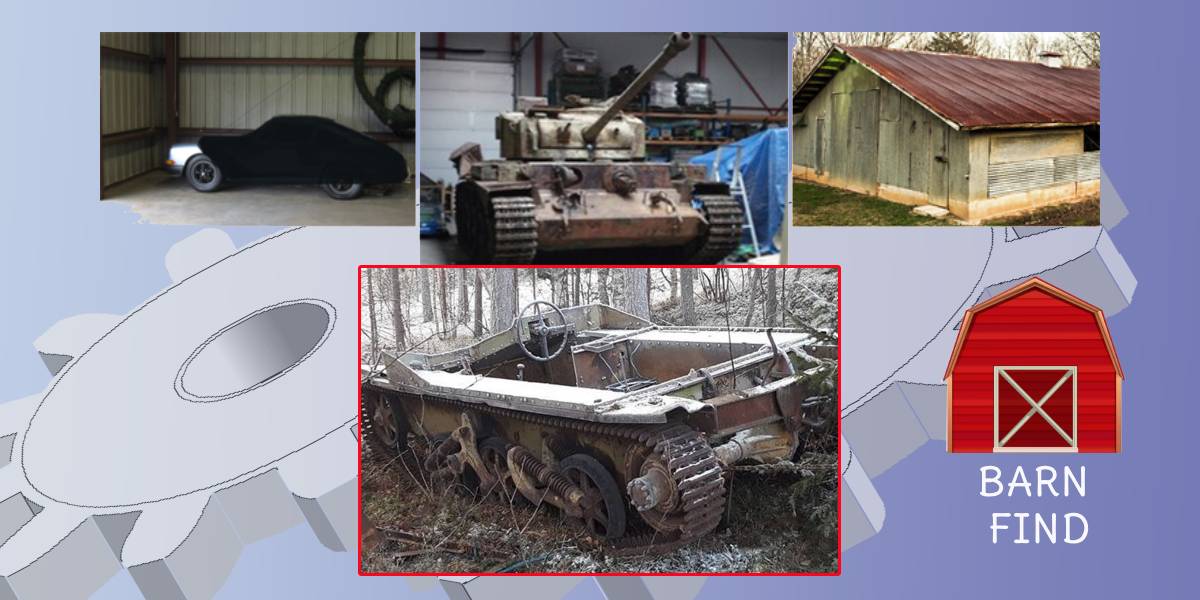
Discover the fascinating world of military barn finds, from forgotten WWII Jeeps and half-tracks to abandoned aircraft and wartime equipment.
We will start with a question: Did you know that car enthusiasts (Gearheads, as we were sometimes called) aren’t the only ones looking for a good barn-find score? There are plenty of people interested in preserving history by finding, restoring and overhauling anything military-related.
This is the first introduction to military barn find adventures. Why? Because there are so many abandon stories out there, and the more I research, the more interesting barn find stories keep appearing.
Here are my credentials. As an off-road heavy equipment mechanic, my career took me to many interesting and out-of-the-ordinary places. Sometimes it meant visiting a farmer’s barnyard to repair a broken tractor or heading to a construction site to fix a crane that had broken down at a job site.
I’ve seen plenty of iron sitting around abandoned during my travels. But the point is, I also got to see and hear many interesting stories along the way.
Since this theme is about military barn finds, this is where we’ll start our story.
What Happened to All That Military Equipment After the War?
That’s a fair question to ask and I hope this explanation answers your inquiry: When the Second World War officially ended, Canada as well as other nations had an abundant supply of military equipment destined for the war arena. Much of it never made it across the pond and was quickly rounded up for disposal as surplus. To be fair, we all needed the material to rebuild out infrastructure, meaning the metal that went into making an army tank for example. That was a lot of material.
Some equipment was scrapped and melted down, while other items were sold off before meeting their ultimate demise.
War veterans and eccentric collectors purchased military vehicles by the dozen. Even scrap yards that were instructed by the Crown Assets Disposal Corporation (CADC), which was created by the Canadian government to manage and liquidate surplus wartime property, “the instructions were simple,” cut up remaining vehicles and equipment into small pieces and sent them off to the smelting pot.
Round up that military surplus and send it to be melted down
However, not everyone followed those instructions.
Some dealers hid equipment away for future sales, while others simply sold these new and sometimes never-used pieces of military hardware to the public.
Take, for example, farmers and loggers, who would buy just about anything with tracks. These machines were perfect for muddy fields, rough terrain and wet working conditions.
During my younger years, I worked in many scrap yards, and it wasn’t uncommon to see all kinds of perfectly good equipment being scrapped. I remember seeing motorcycles and Jeeps, still in their original crates destined for the war arena, sitting for sale at a scrap yard in Toronto.
And the rumour has it, they were selling for just a little more than scrap price!

Could Farmers be Boarder Line Hoarders?
Another point worth mentioning: fair or not, I’m going to focus on farmers quite a bit in these articles. Many would do much the same as the dealers. They bought as much military equipment as they could afford and stored it away in barns for future investment, collecting or simply because they were fascinated by this wartime machinery and they had room.
To verify that claim, I was once introduced to a fellow in the Halton Hills area who lived on a small hobby-farm outside of town. He overhauled and repaired military hardware for clients.
So I asked him: Who would want this old military iron from the war years, especially if it was still in working condition? One guess! “Farmers.”
And there you have it. Another example of military barn finds.
The war in Europe brought on many Military Barn Find Stories
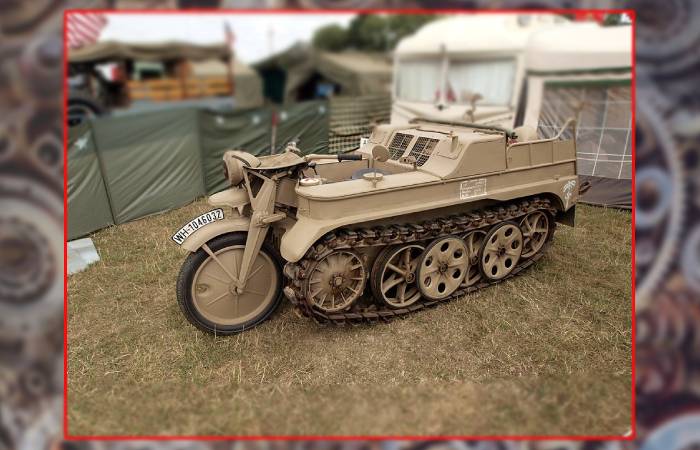
The first part of the story was here in Canada. What about war-torn Europe? That’s where some of the more interesting military barn-find stories come from.
In Europe, and other war-torn countries, there was plenty of military equipment and scrap metal to clear before reconstruction could begin. Over the years, many interesting barn-find stories have emerged from collectors and historians in those countries.
Occupying Forces and Forgotten Military Equipment
After the war, personnel from the occupying forces were assigned to travel around the country and catalogue abandoned military equipment and hardware.
Jeeps, guns and all the other machinery of war had to be disposed of or reused wherever possible. But first, everything had to be logged and accounted for.
In some rare instances, locals or retreating soldiers intentionally hid valuable equipment inside barns and other structures to hopefully come back at a later date.
The intention was to return at a later date and retrieve these goods.
Research showed many did not come back for their hidden treasures, but across America, these once proud soldiers and Civilians had one hell-a-va story to tell at the legion.
However, that brings us right back to the farmers, who were busy hiding anything they could get their hands on before the inventory count even took place. And perhaps some of the personnel assigned to catalogue the leftover military hardware simply turned a blind eye.
Question: Why do farmers get picked on so much, and why do I keep associating them with barn finds?
Well, folks, it’s pretty simple. Farmers have the room. As a rule, they also have plenty of barns, driving sheds and lean-tos scattered around their properties, often well away from prying eyes.
Collecting Military Hardware and Storing It Away
One problem with collecting and storing your finds in barns is that time keeps ticking along. And that brings me to an interesting point.
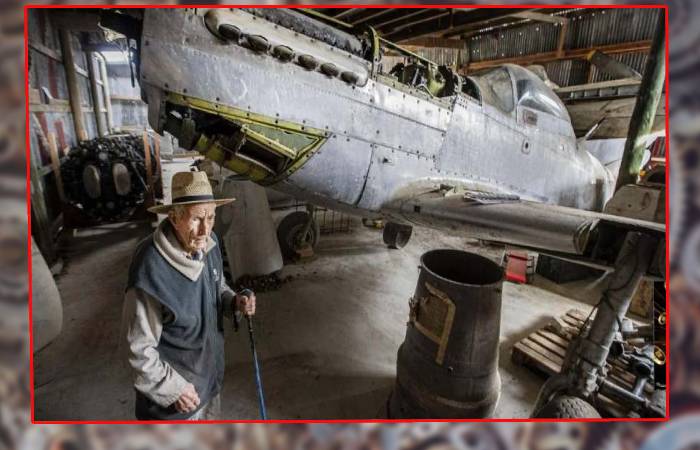
Take, for example, the story of a Second World War de Havilland aircraft supposedly found in a barn years after the war.
Could that well-circulated story be true?
According to the rumour, the owner simply wanted to save these historic pieces from being melted down. He supposedly believed that history would be lost forever if he didn’t do his part to preserve as much of it as possible.
But as the years passed, time eventually caught up with him, as it eventually does with the rest of us.
The airplane and its story were all but forgotten until the estate began cleaning house, including those closed-up barns.
Not only was the de Havilland aircraft reportedly discovered, but other planes and assorted pieces of equipment also came to light for the first time in many years.
Could that story be true? And could some of these European military barn-find stories actually be true?
Could military barn-find stories from Europe actually be true?
Before we get to involved into barn-find stories, perhaps we should consider why people buy, acquire or store military equipment in the first place. I’ve already mentioned that some military personnel had good intentions to retrieve their stash after the war, but didn’t. But, how many others did the same and what kind of military stuff did they stash away.
Go back to those hardworking farmers in war-torn countries. Who could blame them for scooping up anything that had wheels or tracks? A military half-track to help work the fields, or almost any piece of heavy wartime machinery, could be put to good use.
Even decades after D-Day, property owners in France have occasionally uncovered Allied Willys MB Jeeps buried under years of straw, dust and old farm equipment.
The American Army Jeep was so popular after the war that aftermarket companies eventually produced and sold attachments to turn these vehicles into useful farm machines, including equipment for ploughing fields.
Farmers weren’t shy about putting military hardware to work on their properties or using it for cleanup operations. And as mentioned earlier, plenty of equipment may have been overlooked by the very soldiers whose job it was to catalogue everything for reuse or disposal.
And probably whichever came first, someone needed it for the farm or melted it down for that new bridge.
Perhaps farmers, without even realizing it, saved many important historical pieces from their ultimate fate.
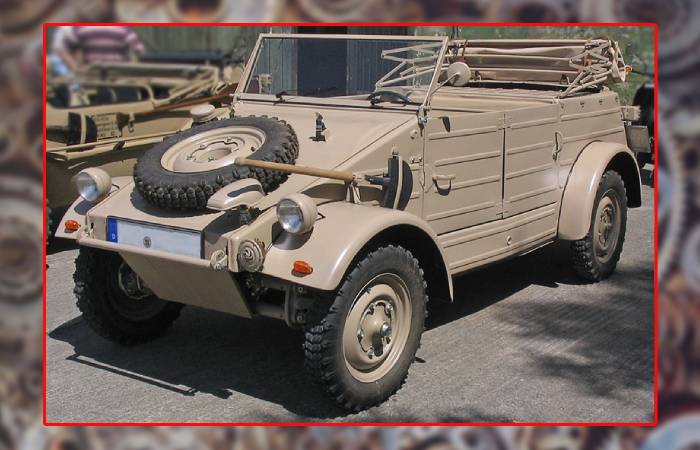
In Europe, farmers also prized the lightweight, rugged and amphibious German Kübelwagen and Schwimmwagen vehicles for their exceptional off-road capabilities.
Many were reportedly rolled into hay barns at the end of the war, repurposed for agricultural work and eventually forgotten as modern tractors took over.
Perhaps these farmers saved more history than they ever realized.
However, military barn-find stories often have a similar ending. Life changes, collectors pass away, and sometimes they leave behind a barn full of forgotten treasures. Or the soldier who told that barn find story so many times, nobody believed them and eventually, time just caught up to them.
When Time Takes Its Toll
Did you know that even though military equipment was designed for heavy-duty environments, engineers also considered its expected service life and some were not long in battles of excursions?
Eventually, parts became difficult to find or simply disappeared altogether, and time moved on. When this equipment broke down in the bush or out in a farmer’s field, it wasn’t uncommon for this iron to be abandoned right where it stopped working.
I recall hearing the story of a military half-track supposedly used by loggers that was eventually discovered off the beaten track in the Muskoka bushland. That one was a true story!
What Exactly Is a Barn Find?
Last but not least, barn find is a term commonly used by car enthusiasts. Although the name suggests a barn, the discovery doesn’t necessarily have to take place in one.
The term is a fairly loose description of something abandoned, forgotten or tucked away for years. It might be found in a barn, an old home garage, a storage locker or some other out-of-the-way hiding place.
For collectors, discovering one of these forgotten pieces of history can be quite a find, whether it’s an old automobile, motorcycle, tractor or military vehicle.
And that, folks, is what this series is all about. As the author of this article, “I rest my case!”
Watch for another military barn-find story from Europe. There are many interesting pieces of forgotten history waiting to be uncovered.
*As a car enthusiast gearhead and the author of this story of military barn finds from Europe, I don’t mind tellin-ya, overhaulen anything military gets my mojo working.
** INTERESTING WEBSITES TO CHECK OUT 🔗**
The Tank Museum’s King Tiger Fundraising Appeal 🔗
The Cancelled Canadian Avro Arrow 🔗
Estimated Cost of Overhauling a Classic Car Project 🔗
Thank you for reading my Barn Find article, however I have one more request: if you enjoy my story and would like to support my site by becoming a sponsor or making a contribution, your generosity (through PayPal) would be sincerely appreciated. Thank you for helping keep “Flippen” site interesting and hopefully informative to you the reader. 🔗